
Diagnostic and Statistical Manual of Mental Disorders (DSM)
entry by Julie M. Marx, Global Family Expert at Expat Valley
DSM is the standard abbreviation for the Diagnostic and Statistical Manual of Mental Disorders, published by the American Psychiatric Association: the primary clinical reference for the diagnosis of mental health conditions in North American and many international clinical and research contexts. The DSM is the reference framework within which clinical diagnoses relevant to the international living experience — including adjustment disorder, prolonged grief disorder, and major depressive disorder — are formally defined. Practitioners working with internationally mobile populations should be familiar with the DSM’s diagnostic categories while also being alert to its cultural assumptions and its tendency to pathologize experiences that are normal responses to extraordinary circumstances.
Comparable terms
ICD (International Classification of Diseases — the WHO equivalent; used in European and many non-North American clinical contexts; the parallel reference for international practitioners) · ICD-11 (the current WHO edition; includes Prolonged Grief Disorder as a recognized diagnosis, as does DSM-5-TR) · DSM-5-TR (the current edition — Diagnostic and Statistical Manual of Mental Disorders, 5th edition, text revision, 2022) · PDM (Psychodynamic Diagnostic Manual — an alternative framework; less widely used but more contextually sensitive)
Why this matters
The DSM shapes which experiences are labeled as disorders and which are not. For mobile, cross‑cultural clients, its categories may fit imperfectly or miss cultural nuance. Practitioners need to use it with cultural humility, not as a universal truth.
Cross-references
PTSD (Wellbeing & Mental Health); Expat Depression (Wellbeing & Mental Health); Ambiguous Loss (Wellbeing & Mental Health); Unresolved Grief (Wellbeing & Mental Health); Diagnostic Overshadowing (Neurodiversity & Medical Complexity Abroad); Cross-Cultural Assessment (Neurodiversity & Medical Complexity Abroad); EAP (Wellbeing & Mental Health). Diagnostic overshadowing describes one of the most consequential clinical biases that DSM-framework practitioners must guard against in internationally mobile populations — the tendency to attribute all presentations to known conditions or cultural context. Cross-cultural assessment documents the methodological challenges in applying DSM diagnostic instruments across cultural and linguistic backgrounds. EAP is the organizational support mechanism within which DSM diagnoses are most commonly first raised in internationally mobile employee populations.
Sources
American Psychiatric Association. (2022). Diagnostic and Statistical Manual of Mental Disorders (5th ed., text revision). American Psychiatric Association Publishing. The primary reference for all clinical diagnoses cited in this vocabulary’s Wellbeing & Mental Health cluster.
The cultural limitations of the DSM framework are well-documented in cross-cultural psychology. For the most applicable critique in intercultural contexts, see: Kleinman, A. (1988). Rethinking Psychiatry: From Cultural Category to Personal Experience. Free Press. This entry is particularly important for practitioners working with non-Western internationally mobile clients for whom DSM categories may not be culturally appropriate or sufficient.
A two-tiered Family Support Program
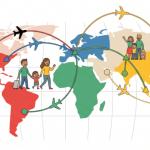 Client Profile Industry: Aviation & Aerospace Headquarters: USA Company Size: Global enterprise with over 100,000 employees worldwide Mobility Program Size: 10-49 international assignments/year Geographic Scope of Assignment Footprint: Global, with primary operational hubs and international corporate stations spanning the Americas, EMEA (Europe, Middle East, Africa), and APAC (Asia-Pacific). The Challenge:...
 Read more
Story 12 of 52 /// The memories so distant
 You were born in China, but you were only twenty months old when we repatriated. That time seems so long ago, the memories so distant. Literally. We moved back to the small town we came from, and rarely tell the stories of our international assignment as the experience is so...Read more
When ‘Home’ Is Two Places: How Global Families Decide Where Vacation Time Goes
 Rodrigo is planning the family’s summer vacation. What should feel fun and exciting is starting to feel like an exercise in frustration and self-doubt. Two years ago, he and Marcela moved with their sons, Benjamín and Tomás, from Chile to Calgary for Marcela’s job. Back then, the idea of living...Read more
Exploring the Decision to Live Apart
 “Is This Right for Us?” The opportunity came with just two weeks to decide. Marc had been offered a role he’d been working toward for years: regional director for his company’s Asia-Pacific operations. It was a career leap, complete with relocation support and a three-year contract in Singapore. But when...Read more
Beyond the Windmills: Read & Watch for True Dutch Insight
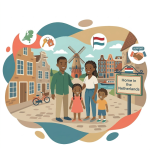 Beyond the Windmills: Read & Watch for True Dutch Insight When you move to a new country, it’s easy to get stuck on the surface-level postcards of tulips, clogs, and picturesque canal houses. But to truly understand your new neighbors, you need to dig into the stories they share. You...Read more
Our Top 10 Global Family Favorites in the Netherlands
(And the Bargains to Get You There) To truly feel at home in the Netherlands, you need to master a vital cultural ritual: the hunt for a korting (discount). The Dutch absolutely love a good bargain, and honestly, why shouldn’t they? Exploring this beautiful country with your family is incredible,...Read moreNavigating Neurodiversity and Medical Complexity Abroad: Advocacy, Inclusion, and Support
 Introduction: The Unseen Layers of Global Mobility While the physical relocation of a family is complex in its own right, moving across borders with neurodiversity or medical complexity adds profound, often invisible layers to the journey. A core premise of this session was that individuals should not be excluded from...Read more
Story 2 of 52 /// After you hang up the phone, you decline the offer
 Imagine being a medical researcher from India, not just any, but the type that is at the stage of their career to lead medical breakthroughs. Now imagine receiving a phone call, a job offer to come work in the Netherlands for the most prestigious company in your field. The contract...Read more
Inclusion in Global Family Life
 Creating Belonging Across Difference On their first Monday morning in a new country, the Rahman-Lewis family arrived at the school gate carrying too many things. There were lunchboxes, water bottles, half-completed forms, a school bag that would not quite close, and a folder of documents that Maya had been told...Read more
Bridging the Social-Emotional Gap
 Designing a Culture of Care for School Transitions When the moving containers are finally unpacked, many organizations consider a relocation "complete." However, for the families at the center of these moves, the true work of grounding is just beginning. In our latest Roundtable for Experts & Educators, we moved beyond...Read more
1 2 3 … 5 Next »