
Society for Intercultural Education Training and Research (SIETAR)
entry by Julie M. Marx, Global Family Expert at Expat Valley
The primary international professional association for intercultural practitioners, including intercultural trainers, educators, researchers, and coaches. SIETAR was founded in 1974 and operates through national and regional chapters globally, providing professional community, research publication, and standards development for the intercultural field. Alongside FIGT and Worldwide ERC, SIETAR is one of the three primary professional bodies whose work most directly shapes the language, standards, and best practices documented in this vocabulary.
Comparable terms
FIGT (see separate entry — the family-focused professional forum; distinct from but complementary to SIETAR) · Worldwide ERC (the HR/mobility professional body; the organizational counterpart) · IAIE (International Association for Intercultural Education — an overlapping organization focused specifically on educational contexts) · AFS (American Field Service — the exchange program organization; associated with early intercultural education practice)
Why this matters
SIETAR helps define standards and shared language for intercultural work worldwide. Many tools and models used in global mobility and education have roots here. Its presence signals that intercultural practice is a profession, not just “common sense.”
Cross-references
FIGT (Professional Bodies); Intercultural Trainer (Professional Support Roles); Intercultural Coach (Professional Support Roles); Intercultural Competence (Cultural Adaptation); IDI (Cultural Adaptation); DMIS (Cultural Adaptation); ICF (Professional Support Roles). The IDI and DMIS are the two most influential assessment and theoretical frameworks within SIETAR’s practitioner community; both are regularly featured in SIETAR conference programming and published practitioner resources. ICF is the coaching body most directly complementary to SIETAR’s training and research focus — many practitioners hold credentials from both organizations.
Sources
SIETAR is documented through its own organizational publications and history. The most directly applicable verified source for SIETAR’s role in professionalizing intercultural practice is: Bennett, M.J. (Ed.). (1998). Basic Concepts of Intercultural Communication. Intercultural Press, whose contributors include many SIETAR founding and early members. For current SIETAR standards and frameworks, see: SIETAR. Competency Framework for Intercultural Trainers. Available at sietar.org.
A two-tiered Family Support Program
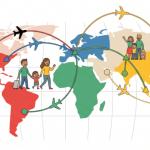 Client Profile Industry: Aviation & Aerospace Headquarters: USA Company Size: Global enterprise with over 100,000 employees worldwide Mobility Program Size: 10-49 international assignments/year Geographic Scope of Assignment Footprint: Global, with primary operational hubs and international corporate stations spanning the Americas, EMEA (Europe, Middle East, Africa), and APAC (Asia-Pacific). The Challenge:...
 Read more
Story 12 of 52 /// The memories so distant
 You were born in China, but you were only twenty months old when we repatriated. That time seems so long ago, the memories so distant. Literally. We moved back to the small town we came from, and rarely tell the stories of our international assignment as the experience is so...Read more
When ‘Home’ Is Two Places: How Global Families Decide Where Vacation Time Goes
 Rodrigo is planning the family’s summer vacation. What should feel fun and exciting is starting to feel like an exercise in frustration and self-doubt. Two years ago, he and Marcela moved with their sons, Benjamín and Tomás, from Chile to Calgary for Marcela’s job. Back then, the idea of living...Read more
Exploring the Decision to Live Apart
 “Is This Right for Us?” The opportunity came with just two weeks to decide. Marc had been offered a role he’d been working toward for years: regional director for his company’s Asia-Pacific operations. It was a career leap, complete with relocation support and a three-year contract in Singapore. But when...Read more
Beyond the Windmills: Read & Watch for True Dutch Insight
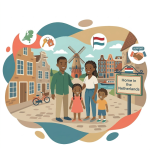 Beyond the Windmills: Read & Watch for True Dutch Insight When you move to a new country, it’s easy to get stuck on the surface-level postcards of tulips, clogs, and picturesque canal houses. But to truly understand your new neighbors, you need to dig into the stories they share. You...Read more
Our Top 10 Global Family Favorites in the Netherlands
(And the Bargains to Get You There) To truly feel at home in the Netherlands, you need to master a vital cultural ritual: the hunt for a korting (discount). The Dutch absolutely love a good bargain, and honestly, why shouldn’t they? Exploring this beautiful country with your family is incredible,...Read moreNavigating Neurodiversity and Medical Complexity Abroad: Advocacy, Inclusion, and Support
 Introduction: The Unseen Layers of Global Mobility While the physical relocation of a family is complex in its own right, moving across borders with neurodiversity or medical complexity adds profound, often invisible layers to the journey. A core premise of this session was that individuals should not be excluded from...Read more
Story 2 of 52 /// After you hang up the phone, you decline the offer
 Imagine being a medical researcher from India, not just any, but the type that is at the stage of their career to lead medical breakthroughs. Now imagine receiving a phone call, a job offer to come work in the Netherlands for the most prestigious company in your field. The contract...Read more
Inclusion in Global Family Life
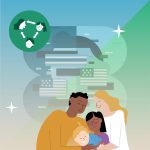 Creating Belonging Across Difference On their first Monday morning in a new country, the Rahman-Lewis family arrived at the school gate carrying too many things. There were lunchboxes, water bottles, half-completed forms, a school bag that would not quite close, and a folder of documents that Maya had been told...Read more
Bridging the Social-Emotional Gap
 Designing a Culture of Care for School Transitions When the moving containers are finally unpacked, many organizations consider a relocation "complete." However, for the families at the center of these moves, the true work of grounding is just beginning. In our latest Roundtable for Experts & Educators, we moved beyond...Read more
1 2 3 … 5 Next »