
Self-Initiated Expatriate (SIE)
entry by Julie M. Marx, Global Family Expert at Expat Valley
An individual who relocates internationally under their own initiative and at their own expense, without organizational sponsorship or employer-assigned status. Distinguished from the assigned expatriate (AE) by the absence of employer mandate, package, and support infrastructure, and by the individual’s personal rather than organizational motivation for relocation.
Comparable terms
Assigned expatriate [AE — the organizational counterpart; contrasted with SIE in research]· Self-directed expat (community usage — informal equivalent) · Voluntary migrant (migration studies — broader; includes permanent resettlement) · Independent expat (coaching, community) · Self-initiated foreign worker [SFW — earlier research variant; Suutari & Brewster, 2000]
Why this matters
SIEs often have high motivation and agency but less formal support and safety net. They must build networks, knowledge, and coping structures largely alone. Understanding this profile helps coaches and employers design more suitable offers and supports.
Cross-references
Accompanying Partner Career Disruption (Family Dynamics); Social Network Building (Family Dynamics); Positive Mobility (Transitions & Mobility); EAP (Wellbeing & Mental Health). Social network building is a particularly critical self-management skill for SIEs, who lack the organizational peer network that AEs typically receive through employer onboarding. Positive mobility describes the intentional, growth-oriented orientation toward the internationally mobile life that SIEs (who have chosen mobility independently) are often well-positioned to adopt. EAP is relevant because SIEs without employer-sponsored EAP access may face mental health support gaps that self-funded alternatives do not adequately fill.
Sources
The phrase “self-initiated expatriate” was coined by Suutari and Brewster (2000) to describe self-initiated foreign work experience that transcends organizational and geographical boundaries. Suutari, V. & Brewster, C. (2000). Making their own way: International experience through self-initiated foreign assignments. Journal of World Business, 35(4), 417–436.
The SIE concept remains contested in terms of definition boundaries — some researchers require full self-funding; others include those receiving partial employer support. See: Andresen, M., Bergdolt, F., & Dickmann, M. (2014). What makes a self-initiated expatriate? International Journal of Human Resource Management, 25(16), 2281–2298.
A two-tiered Family Support Program
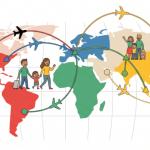 Client Profile Industry: Aviation & Aerospace Headquarters: USA Company Size: Global enterprise with over 100,000 employees worldwide Mobility Program Size: 10-49 international assignments/year Geographic Scope of Assignment Footprint: Global, with primary operational hubs and international corporate stations spanning the Americas, EMEA (Europe, Middle East, Africa), and APAC (Asia-Pacific). The Challenge:...
 Read more
Story 12 of 52 /// The memories so distant
 You were born in China, but you were only twenty months old when we repatriated. That time seems so long ago, the memories so distant. Literally. We moved back to the small town we came from, and rarely tell the stories of our international assignment as the experience is so...Read more
When ‘Home’ Is Two Places: How Global Families Decide Where Vacation Time Goes
 Rodrigo is planning the family’s summer vacation. What should feel fun and exciting is starting to feel like an exercise in frustration and self-doubt. Two years ago, he and Marcela moved with their sons, Benjamín and Tomás, from Chile to Calgary for Marcela’s job. Back then, the idea of living...Read more
Exploring the Decision to Live Apart
 “Is This Right for Us?” The opportunity came with just two weeks to decide. Marc had been offered a role he’d been working toward for years: regional director for his company’s Asia-Pacific operations. It was a career leap, complete with relocation support and a three-year contract in Singapore. But when...Read more
Beyond the Windmills: Read & Watch for True Dutch Insight
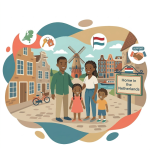 Beyond the Windmills: Read & Watch for True Dutch Insight When you move to a new country, it’s easy to get stuck on the surface-level postcards of tulips, clogs, and picturesque canal houses. But to truly understand your new neighbors, you need to dig into the stories they share. You...Read more
Our Top 10 Global Family Favorites in the Netherlands
(And the Bargains to Get You There) To truly feel at home in the Netherlands, you need to master a vital cultural ritual: the hunt for a korting (discount). The Dutch absolutely love a good bargain, and honestly, why shouldn’t they? Exploring this beautiful country with your family is incredible,...Read moreNavigating Neurodiversity and Medical Complexity Abroad: Advocacy, Inclusion, and Support
 Introduction: The Unseen Layers of Global Mobility While the physical relocation of a family is complex in its own right, moving across borders with neurodiversity or medical complexity adds profound, often invisible layers to the journey. A core premise of this session was that individuals should not be excluded from...Read more
Story 2 of 52 /// After you hang up the phone, you decline the offer
 Imagine being a medical researcher from India, not just any, but the type that is at the stage of their career to lead medical breakthroughs. Now imagine receiving a phone call, a job offer to come work in the Netherlands for the most prestigious company in your field. The contract...Read more
Inclusion in Global Family Life
 Creating Belonging Across Difference On their first Monday morning in a new country, the Rahman-Lewis family arrived at the school gate carrying too many things. There were lunchboxes, water bottles, half-completed forms, a school bag that would not quite close, and a folder of documents that Maya had been told...Read more
Bridging the Social-Emotional Gap
 Designing a Culture of Care for School Transitions When the moving containers are finally unpacked, many organizations consider a relocation "complete." However, for the families at the center of these moves, the true work of grounding is just beginning. In our latest Roundtable for Experts & Educators, we moved beyond...Read more
1 2 3 … 5 Next »