
Cultural Mediator
entry by Julie M. Marx, Global Family Expert at Expat Valley
A professional who facilitates understanding and communication between individuals or groups from different cultural backgrounds, operating at the intersection of interpretation, cultural explanation, and conflict de-escalation. In the international living context, cultural mediators may work in school settings, healthcare environments, community organizations, or HR functions, supporting both the mobile individual and the host institution to bridge cultural difference.
Comparable terms
Intercultural mediator (education, social work — equivalent; more common in European contexts) · Cultural broker (social work, healthcare — overlapping; emphasis on advocacy and navigation rather than neutral facilitation) · Cultural interpreter (education, healthcare — emphasizes the explanatory function) · Community liaison (destination services, education — operational equivalent in some institutional contexts) · Cross-cultural facilitator (training — broader; may refer to any facilitation across cultural difference)
Why this matters
Cultural mediators go beyond language to explain norms, expectations, and hidden rules. They can defuse conflict and reduce misunderstanding in schools, hospitals, and HR. For families, they often make the difference between feeling judged and feeling understood.
Cross-references
Intercultural Trainer (Professional Support Roles); Intercultural Coach (Professional Support Roles); ICC (Cultural Adaptation); Cultural Humility (Cultural Adaptation); DSP (Professional Support Roles); HCN (Family Dynamics). ICC is the communicative competency framework most directly relevant to the cultural mediator’s work — the mediator’s effectiveness depends on their ability to facilitate intercultural communication across cultural and linguistic difference. Cultural humility is the ethical orientation that distinguishes genuine cultural mediation from mere linguistic interpretation. The destination services provider is the role most likely to engage a cultural mediator as part of settling-in support; HCN describes the population — host country nationals — with whom the cultural mediator most commonly facilitates communication on behalf of newly arrived international families.
Sources
The term cultural mediator is established in European social work, healthcare, and education policy contexts but lacks a single foundational academic source applicable across the international living field. The most directly applicable source is: Kaufert, J.M. & Putsch, R.W. (1997). Communication through interpreters in healthcare: Ethical dilemmas arising from differences in class, culture, language, and power. Journal of Clinical Ethics, 8(1), 71–87. For the educational context, see: Nieto, S. (2010). Language, Culture, and Teaching: Critical Perspectives (2nd ed.). Routledge.
Moving Abroad With Additional Family Support Needs
 Planning for care, education, language and everyday family life through every stage of relocation. A support system is rarely just a list of services. It may include a doctor who knows your history, a teacher who understands how your child learns, or a therapist whose advice fits naturally into everyday...
 Read more
Q3 Family Care Check-In Insights Report
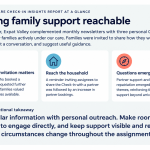 What proactive outreach reveals about the questions global families are carrying Published 06-Oct-2026 by Karlijn Jacobs, Founder & CEO of Expat Valley Continue reading for the full report or download the PDF here. A family-support benefit is only useful when a family can find it, understand that it applies to...Read more
Story 27 of 52 /// Today was exhausting
 “Are they asleep?” “They are. Finally. Today was exhausting.” “I know sweetheart. I’m really proud of the three of you pulling through another day. What did you do today?” “We went to the local library. Their selection of international books is limited, but the kids were thrilled as it has...Read more
When the Weather Changes Everything
 Helping your family build a life in a climate that feels nothing like home The fourth wet Wednesday By the fourth wet Wednesday in a row, Amina Okafor checked the weather twice before asking the children to put on their shoes. Zuri, eleven, stood by the window in the trainers...Read more
Story 33 of 52 /// A man with a plan
 My father knew well in advance, like twelve months before, that we would be moving. He really put thought into what me and my siblings needed in order to have a soft landing in Germany. His conclusion was that language was crucial in order to settle in, so he came...Read more
A Strong School Year Start for Global Families
 How to understand the hidden rules, changing routines and everyday surprises of school across borders The school year is underway. The morning routine may already be taking shape, school messages may be arriving through an unfamiliar app, and your child may already have opinions about lunch, homework, classmates or the...Read more
Story 18 of 52 /// Left behind without a diploma
 This summer, just like last year, there will be families repatriating from an international assignment while leaving one of their children behind. This child is probably around 17 years old. They have switched schools, curricula, and language of instruction at least one time, maybe more. They had to make a...Read more
Coming Home Isn’t Simple: Why Repatriation Is Hard
 The Return No One Prepares You For Ellen had been counting down to this move for months. Not the one three years ago, when she and Thomas packed up their life in Rotterdam for Singapore. This one: the move back. She expected relief. Familiar streets, her mother two metro stops...Read more
A two-tiered Family Support Program
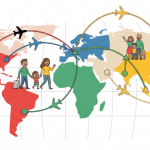 Client Profile Industry: Aviation & Aerospace Headquarters: USA Company Size: Global enterprise with over 100,000 employees worldwide Mobility Program Size: 10-49 international assignments/year Geographic Scope of Assignment Footprint: Global, with primary operational hubs and international corporate stations spanning the Americas, EMEA (Europe, Middle East, Africa), and APAC (Asia-Pacific). The Challenge:...Read more
Story 12 of 52 /// The memories so distant
 You were born in China, but you were only twenty months old when we repatriated. That time seems so long ago, the memories so distant. Literally. We moved back to the small town we came from, and rarely tell the stories of our international assignment as the experience is so...Read more
1 2 3 … 6 Next »