
Bicultural Child
entry by Julie M. Marx, Global Family Expert at Expat Valley
A child raised with meaningful exposure to, and identity formation within, two distinct cultural frameworks, typically due to parental heritage, intermarriage, or sustained international residence. The term implies active engagement with both cultures rather than merely passive exposure.
Comparable terms
Cross-cultural kid [CCK — broader umbrella; bicultural child is a subset] · Dual heritage child (education — emphasizes parental background) · Mixed heritage child (community — often used when two ethnic or national backgrounds are involved) · Multicultural child (education, general — implies more than two cultural frameworks) · Third culture kid (TCK — overlapping but distinct; TCK emphasizes the interstitial culture formed by mobility)
Why this matters
Bicultural children navigate questions of “which side” they belong to from early on. When both cultures are valued, biculturalism can be a powerful source of flexibility and empathy. Without support, it can also create tension, loyalty conflicts, or identity confusion.
Cross-references
CCK (Cultural Adaptation); Cultural Identity (Cultural Adaptation); BII (Identity & Belonging); Heritage Language (Language & Identity); Multilingual Education (Education); Parenting Across Cultures (Family Dynamics); Language Identity (Language & Identity). BII describes the quality of the bicultural identity the child develops — whether the two cultural frameworks feel compatible or conflicted — and is the most important individual-level outcome measure for bicultural children. Heritage language is typically one of the primary carriers of the heritage cultural identity in bicultural children; multilingual education describes the institutional provision that supports its maintenance. Parenting across cultures documents the parental challenges and decisions most directly shaping bicultural development; language identity describes how the child’s relationship to their languages and cultural identity co-develop.
Sources
Pollock, D.C., Van Reken, R.E., & Pollock, M.V. (2017). Third Culture Kids: Growing Up Among Worlds (3rd ed.). Nicholas Brealey Publishing. The CCK framework positions bicultural children as one of several cross-cultural subgroups, distinguished from TCKs by the nature rather than geography of their cross-cultural formation.
For the psychological dimensions of bicultural identity development, see: Benet-Martínez, V. & Haritatos, J. (2005). Bicultural identity integration (BII): Components and psychosocial antecedents. Journal of Personality, 73(4), 1015–1050.
A two-tiered Family Support Program
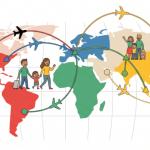 Client Profile Industry: Aviation & Aerospace Headquarters: USA Company Size: Global enterprise with over 100,000 employees worldwide Mobility Program Size: 10-49 international assignments/year Geographic Scope of Assignment Footprint: Global, with primary operational hubs and international corporate stations spanning the Americas, EMEA (Europe, Middle East, Africa), and APAC (Asia-Pacific). The Challenge:...
 Read more
Story 12 of 52 /// The memories so distant
 You were born in China, but you were only twenty months old when we repatriated. That time seems so long ago, the memories so distant. Literally. We moved back to the small town we came from, and rarely tell the stories of our international assignment as the experience is so...Read more
When ‘Home’ Is Two Places: How Global Families Decide Where Vacation Time Goes
 Rodrigo is planning the family’s summer vacation. What should feel fun and exciting is starting to feel like an exercise in frustration and self-doubt. Two years ago, he and Marcela moved with their sons, Benjamín and Tomás, from Chile to Calgary for Marcela’s job. Back then, the idea of living...Read more
Exploring the Decision to Live Apart
 “Is This Right for Us?” The opportunity came with just two weeks to decide. Marc had been offered a role he’d been working toward for years: regional director for his company’s Asia-Pacific operations. It was a career leap, complete with relocation support and a three-year contract in Singapore. But when...Read more
Beyond the Windmills: Read & Watch for True Dutch Insight
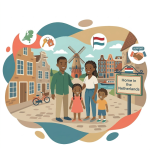 Beyond the Windmills: Read & Watch for True Dutch Insight When you move to a new country, it’s easy to get stuck on the surface-level postcards of tulips, clogs, and picturesque canal houses. But to truly understand your new neighbors, you need to dig into the stories they share. You...Read more
Our Top 10 Global Family Favorites in the Netherlands
(And the Bargains to Get You There) To truly feel at home in the Netherlands, you need to master a vital cultural ritual: the hunt for a korting (discount). The Dutch absolutely love a good bargain, and honestly, why shouldn’t they? Exploring this beautiful country with your family is incredible,...Read moreNavigating Neurodiversity and Medical Complexity Abroad: Advocacy, Inclusion, and Support
 Introduction: The Unseen Layers of Global Mobility While the physical relocation of a family is complex in its own right, moving across borders with neurodiversity or medical complexity adds profound, often invisible layers to the journey. A core premise of this session was that individuals should not be excluded from...Read more
Story 2 of 52 /// After you hang up the phone, you decline the offer
 Imagine being a medical researcher from India, not just any, but the type that is at the stage of their career to lead medical breakthroughs. Now imagine receiving a phone call, a job offer to come work in the Netherlands for the most prestigious company in your field. The contract...Read more
Inclusion in Global Family Life
 Creating Belonging Across Difference On their first Monday morning in a new country, the Rahman-Lewis family arrived at the school gate carrying too many things. There were lunchboxes, water bottles, half-completed forms, a school bag that would not quite close, and a folder of documents that Maya had been told...Read more
Bridging the Social-Emotional Gap
 Designing a Culture of Care for School Transitions When the moving containers are finally unpacked, many organizations consider a relocation "complete." However, for the families at the center of these moves, the true work of grounding is just beginning. In our latest Roundtable for Experts & Educators, we moved beyond...Read more
1 2 3 … 5 Next »