
Coming Home Isn’t Simple: Why Repatriation Is Hard
The Return No One Prepares You For
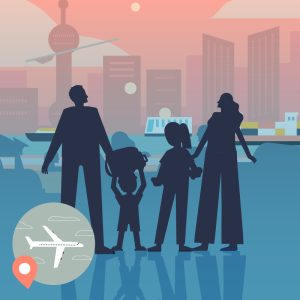
Ellen had been counting down to this move for months. Not the one three years ago, when she and Thomas packed up their life in Rotterdam for Singapore. This one: the move back.
She expected relief. Familiar streets, her mother two metro stops away, a language she wouldn’t have to think in. Instead, on the morning of their last week in Singapore, she found herself crying in the kitchen over a coffee maker she was giving away to a neighbor, and she couldn’t fully explain why.
Their son Bram, age six, only remembers Singapore as home. When he asked, “Why do we have to move if this is our home?”, neither Ellen nor Thomas had a simple answer.
This is repatriation: the move that looks, on paper, like the easy one. In practice, many global families find it is the move nobody warned them about.
Why Coming “Home” Catches Families Off Guard
Most preparation, packing lists, and emotional bandwidth go toward the outbound move. Repatriation is often treated as the finish line rather than a transition in its own right, so families rarely brace for it the way they braced for departure.
Home is supposed to be the easy part. You already know the language, the streets, the rhythm of the week. So when it doesn’t feel familiar anymore, it can knock you sideways in a way the original move abroad never did.
There’s a name for that feeling: reverse culture shock. It’s the disorientation, restlessness, or grief that can show up when you return to a home country that has quietly moved on without you, while you’ve been quietly changing too. It tends to follow its own emotional ups and downs, and for a lot of families, it lands harder than the culture shock of arriving somewhere new, mostly because nobody warns you it’s coming.
And it’s far more common than most families expect. Somewhere between 15% and 38% of people who return from an international assignment leave their job within a year or two of coming home. Behind that number are global families like yourselves, quietly wondering why the place they used to call home still feels like somewhere else.
The Emotional Stages of Repatriation
Just as arriving in a new country brings a recognizable emotional arc, so does coming home. Naming the stages can make them feel less like something going wrong and more like something moving through.
- Anticipation: Excitement about familiar comforts: family, food, a language that doesn’t require translating in your head.
- Disorientation: The unsettling realization that “home” has changed, or that you have changed more than home has. Old routines no longer fit quite right.
- Grief: Mourning the host-country life, friendships, and version of yourself left behind. This often arrives after the goodbyes are already done, which can make it feel confusing or unwelcome.
- Reintegration: Slowly rebuilding routines, community, and a sense of place, usually on a different timeline for each family member.
Happiness and grief can live side by side here, just as they can at any other stage of global family life. Missing your old life abroad does not mean you are ungrateful to be home. It means you built something real while you were away.
How Children, Partners, and Loved Ones “Back Home” Adapt Differently
One of the most overlooked parts of repatriation is that it rarely happens on one timeline. Each family member can be in a different stage at the same time, which is often where the friction shows up.
- Children may experience repatriation as their first real reverse move. For a child like Bram, Singapore is not “abroad,” it’s simply home, so arriving in the Netherlands can feel like the disruptive move, not the return. Their sense of home tends to be tied to relationships and routines, not geography, which is why leaving a familiar school and friend group abroad can hit harder than adults expect.
- Partners, especially the one who did not have their own job or professional identity abroad, often face a distinct kind of strain. Research on repatriating partners describes it as its own identity transition: rebuilding a role, a community, and a sense of independence that had been built from scratch abroad. Again.
- Grandparents, extended family, and other loved ones back home often expect a simple “return to normal.” That expectation can create quiet friction if they don’t fully see how much the family has changed, even though the physical distance has closed.
None of these timelines are wrong. But when they go unspoken, one family member’s grief can look, to another, like ingratitude, or one person’s relief can look like indifference to what was left behind.
Questions Worth Asking Before and During the Move Home
What am I assuming “home” will feel like, and is that assumption still true?
Where is each person in our family right now, excited, grieving, disoriented, or already settling in?
What from our life abroad do we want to intentionally carry back with us?
These aren’t questions with tidy answers. They’re an invitation to notice what’s actually happening in your family, rather than what you expected to happen.
Practical Ways to Support the Transition
- Name the grief before it arrives
Why it matters: Treating goodbyes as only logistics (shipping, school transfers, closing accounts) leaves little room for the emotional loss underneath them.
How to start: Talk openly about what you’ll each miss, weeks before departure, not just after you’ve landed. - Let timelines differ
Why it matters: Expecting the whole household to feel “settled” on the same schedule sets everyone up to feel like they’re failing.
How to start: Check in with each family member separately. A child who seems fine at week two may struggle at month three, and the reverse is just as common. - Rebuild identity anchors on purpose
Why it matters: The same “life anchors” that mattered when you first moved abroad, healthcare, community, routine, matter again on the way back (Setting Yourself Up Locally: 10 Tips for Every Relocation Stage).
How to start: Treat home as somewhere you’re arriving, not somewhere you already know. Find a new doctor, a new rhythm, a new community, even if the country is familiar. - Keep a bridge to the host country
Why it matters: A few maintained friendships or rituals can ease the identity loss that comes with leaving a life behind.
How to start: Schedule a standing video call with a close friend abroad, or keep a small tradition from your host country alive at home. - Get support early, not after things feel broken
Why it matters: Families and organizations that treat repatriation as its own transition, not just the end of an assignment, tend to see meaningfully smoother outcomes.
How to start: Bring in outside support, such as a Global Family Needs & Wellbeing Assessment, before the return, not once someone is already struggling.
Coming Home, Differently
A few months into being back in Rotterdam, Ellen still doesn’t feel fully settled, and she has stopped expecting to. Bram found one friend at his new school who also grew up abroad, and it made the year feel less lonely. Thomas still calls a colleague in Singapore most Fridays.
Nothing clicked neatly back into place. But naming what they were each carrying gave them room to move through it at their own pace, together.
Frequently Asked Questions
What is reverse culture shock?
Reverse culture shock is the disorientation, restlessness, or grief that can occur when someone returns to their home country after living abroad. It follows its own emotional stages and can be more disruptive than the original move, largely because it’s unexpected.
Why is repatriation often harder than moving abroad?
Moving abroad comes with built-in preparation: research, planning, and emotional bracing for change. Repatriation is often assumed to be a simple return to the familiar, so families rarely prepare for it emotionally, even though home, and the people returning to it, have both changed.
How long does it take a family to adjust after repatriation?
There is no fixed timeline. Family members typically move through stages of anticipation, disorientation, grief, and reintegration at different speeds, sometimes taking many months to feel settled again.
Do children struggle with repatriation more than adults?
Not necessarily more, but often differently. Children’s sense of home tends to be tied to relationships and routines rather than geography, so leaving a familiar life abroad can feel like the disruptive move, even though adults may frame it as “going home.”
Continue this conversation
Repatriation is a key factor in living a happy global family life. We hope the resources in this article help you, and understand if you may feel that you need more assistance for your family to thrive. You can simply book a free Family Support Discovery Call with one of our Global Family Experts to discuss your needs and learn how we can help.
In the month that this article is published (August 2026) our team hosts a live webinar that addresses “Reconnecting After Life Abroad”. Register for our Guidebook Plan to join this webinar, or watch the recording afterwards.
« Back