
More Than Hormones: Navigating Perimenopause and Menopause Across Borders
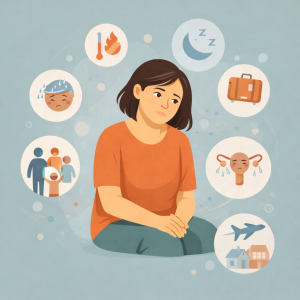
A collaborative article with Colette White and Expat Valley
When women relocate internationally, much of the preparation tends to focus on external transitions: visas, housing, schools, language, logistics. But for many women in midlife, there is another transition unfolding at the same time, one that is often far less visible and far less understood.
Perimenopause and menopause can reshape how a woman sleeps, thinks, feels, relates, and functions day to day. And when that experience is layered onto the demands of life abroad, navigating a foreign healthcare system, living far from familiar support networks, and often doing so in another language, the impact can be profound.
This is something Colette White understands both professionally and personally. An Irish gynecologist living in Germany, Colette works with women navigating perimenopause and menopause, many of them while living outside their home country. Through our conversation, one theme became unmistakably clear: for globally mobile women, this stage of life is not just a hormonal event. It is an emotional, relational, and often deeply disorienting experience that deserves far more recognition and support.
As Colette put it, “No matter where you are, perimenopause is underrecognized.”
When the Problem Has No Name
One of the first challenges women face is simply recognizing what is happening. Perimenopause, the transition leading up to menopause, can begin earlier than many expect. Colette explained that symptoms can begin as early as the late thirties, yet many women and even many doctors do not immediately connect the dots.
That gap matters. “Until their periods are gone, their doctors don’t want to say it has anything to do with hormones,” she said. “And that’s just not true.”
For women living internationally, that lack of recognition can be especially difficult. When the symptoms themselves are confusing and the medical response is uncertain, many women are left doubting their own experience. The result is often not early support, but delayed care, arriving only after things have become overwhelming.
Colette described how frequently women come to her only once they are at a breaking point. They are not just uncomfortable. They are exhausted, frightened, emotionally frayed, and often wondering whether they are losing themselves.
That reality is especially striking because the symptoms are so varied. Some are more widely recognized, such as hot flushes or sleep disruption. Others are easier to dismiss or misattribute: irritability, anxiety, brain fog, difficulty concentrating, restlessness, low mood, changes in libido, weight gain, dry skin, urinary symptoms, and digestive changes. “There’s about forty-something official symptoms,” Colette noted, “but depending on what you read, there’s anything up to about a hundred.”
And because so many of these symptoms can also resemble other conditions, diagnosis is not always straightforward. As Colette explained, there is no single test for perimenopause. It is often identified through the pattern of symptoms, their timing, and a careful clinical conversation. That makes listening especially important.
When Life Abroad Magnifies Everything
What might already feel destabilizing in familiar surroundings can become much harder in a foreign context.
Colette shared the story of one woman who had recently become single and was living in a new country without social support. She was struggling with insomnia, anxiety, brain fog, and declining performance at work. Once self-confident, she now found even routine tasks daunting. Going to the supermarket felt intimidating because of the language barrier, so she stayed home and relied on takeout late at night. Her sleep worsened. Her eating habits deteriorated. Her health began to spiral. She developed pre-diabetes. More than anything, she felt alone.
What stands out in this story is not only the severity of the symptoms, but how relocation intensified them. Without local support, without a familiar doctor, without language ease, and without the confidence to explain what was happening, everything became harder.
This is one of the central insights from Colette’s work: living abroad does not create perimenopause, but it can magnify its effects. Administrative hurdles feel larger. Medical appointments are harder to arrange. Small daily tasks require more energy. And when overwhelm is already a symptom, every extra barrier matters.
“The more barriers that are put up to you finding care,” Colette explained, “the harder it is to do it and the less likely you are.”
For expat women, this can create a painful cycle. Symptoms increase overwhelm. Overwhelm makes it harder to seek help. Delayed support allows the symptoms to deepen. What begins as an underrecognized transition can become a crisis of health, work, identity, and relationship.
The Challenge of Starting Over in Healthcare
Another theme that surfaced repeatedly in our conversation was continuity of care, or rather, the lack of it.
Moving across borders often means leaving behind trusted doctors, familiar systems, and treatment plans that were already working. In a new country, women may need to begin again: finding the right specialist, understanding the healthcare structure, confirming diagnoses, explaining symptoms in another language, and advocating for treatment that may not be understood or supported in the same way.
Colette sees this often, not only with perimenopause and menopause, but also with women who arrive already being treated for conditions such as ADHD. In Germany, for example, women may have to go through assessment processes again in order to continue treatment. During that gap, they suffer.
This discontinuity can be particularly distressing for women who were already on hormone treatment and then encounter a doctor who tells them to stop. “That’s dangerous and you shouldn’t take that,” is the message some receive. But Colette emphasized that much of this fear is rooted in outdated understanding and insufficient training. The result is that women are sometimes taken off treatments that had been helping them, only to find themselves once again unsupported.
This reinforces a broader point that runs through all of Expat Valley’s work: relocation is rarely just a logistical process. It often involves re-establishing continuity in the most personal areas of life, health, identity, parenting, schooling, relationships, and daily functioning. For women in midlife, healthcare continuity can be one of the most critical pieces.
The Power of Being Believed
If there was one phrase from our conversation that lingered, it was this: “I’m so glad you believe me.”
Colette said women tell her this often.
That response says as much about the current gap in care as any statistic could. Many women arrive not only carrying symptoms, but also the emotional weight of having been dismissed, minimized, or misunderstood. Some have seen doctor after doctor before finding someone who listens. Colette spoke of one recent patient who had seen twenty-two doctors before reaching her.
This is where her work comes into focus as something more than medical management alone. Yes, treatment matters. Education matters. Lifestyle support matters. But so does being heard.
Colette is keenly aware that part of what happens in a consultation is therapeutic in itself. It is not only the prescription at the end, but the experience of being listened to, taken seriously, and met with care. For women who have begun to doubt themselves, that can be deeply restoring.
This echoes something Expat Valley sees often in global transitions more broadly: people do not only need information. They need relational safety. They need someone to say, with clarity and compassion, that what they are experiencing is real.
Community as a Form of Care
For Colette, one of the most important supports for women living abroad is community.
This is not a side note to care. In many cases, it is part of care itself.
“The overwhelming response,” she said after giving a recent workshop to women, “was that it was great not to feel so alone.” Again and again, women told her that simply being in a room with others who understood was one of the most powerful parts of the experience.
That insight is especially relevant for expat life. Isolation can happen quietly. A woman may be functioning outwardly, working, parenting, attending appointments, getting through the day, while inwardly feeling frightened, disconnected, and increasingly unsure of herself. In that context, community provides more than friendship. It offers normalization, practical support, and emotional grounding.
Colette spoke about finding support through online communities, especially social media, and also through local, in-person connections. In Germany, she noted, clubs and associations can be an excellent starting point. She also described how she intentionally leaned into unexpected sources of community, including building relationships with elderly neighbors. Support, she suggested, does not always arrive in the form we expect.
Her advice was simple and humane: keep looking, and do not give up after one disappointing experience. “You will find your people,” she said.
That message feels especially important for women in transition. When symptoms such as anxiety, low confidence, or poor sleep are already making life feel smaller, it can take courage to reach outward. But community often begins there, with one conversation, one group, one invitation, one brave attempt to not remain alone.
What Partners and Families Need to Know
One of the most practical parts of our conversation came when Chris asked Colette what advice she would give to men.
Her answer was thoughtful and needed. She pointed out that there is still very little information directed toward partners, even though relational support can make an enormous difference.
For partners, the first step is awareness. Knowing that irritability, anxiety, sleep disruption, cognitive shifts, physical discomfort, and intimacy challenges may all be part of this transition can change how those experiences are interpreted. Rather than seeing everything through the lens of conflict or rejection, partners can begin to understand what their loved one may actually be carrying.
Colette encouraged men to approach this stage with grace, patience, and communication. She compared it, in one sense, to the patience parents try to extend to teenagers: recognizing that something substantial is happening internally, and resisting the urge to take every moment personally.
She also noted that partners may sometimes be the first to notice changes clearly. A gentle, loving observation, offered without accusation, can open an important door. “I love you and I know you,” she suggested a partner might say. “Do you think this could possibly be part of perimenopause?”
That kind of conversation requires tenderness, but it also communicates something essential: you are not alone in this, and I am paying attention.
How do health changes show up in your closest relationships?
What kind of support helps you feel most understood?
Who in your life helps you feel believed, rather than dismissed?
Practical Ways to Support Women in Transition Abroad
While every woman’s experience is different, several practical themes emerged from Colette’s insights.
Learn the early signs. Changes in sleep, mood, concentration, anxiety, irritability, and confidence may be easy to dismiss at first, especially when life abroad is already demanding. Awareness helps women seek support earlier rather than later.
Advocate early. Colette emphasized that women do not need to wait until they are desperate. Seeking help at the first signs of change can prevent deeper distress and make it easier to consider supportive options.
Expect individuality. There is no one-size-fits-all treatment path. Support may include medical care, lifestyle changes, improved sleep, nutrition, movement, stress reduction, and community connection. What helps one woman may not be the right fit for another.
Look for continuity. If you are moving internationally, try to gather medical records, current prescriptions, previous diagnoses, and provider details before the move when possible. Rebuilding care is easier when you are not starting from zero.
Build support on purpose. Whether online or in person, formal or informal, finding people who understand can make a profound difference. In many cases, it is the presence of community, not only the presence of treatment, that helps women begin to steady themselves again.
Include employers and mobility professionals. If organizations are relocating employees internationally, women’s midlife health should not be treated as a private inconvenience to be managed alone. Community, flexibility, and informed support structures matter.
A Stage of Life That Can Still Hold Hope
Although much of our conversation centered on the challenges women face, Colette was equally clear that this season of life is not only about loss or survival.
She spoke of the many women who eventually experience this stage as freeing. There can be a growing clarity about selfhood, stronger boundaries, less tolerance for unhealthy dynamics, and a more grounded sense of what matters. “They feel more content in themselves,” she said, “knowing what they want, knowing who they are.”
She also reframed this period as an opportunity for future health. Paying attention to symptoms, strengthening lifestyle habits, and seeking appropriate support can help protect long-term wellbeing, including bones, muscles, heart health, and overall quality of life.
Her encouragement was not to romanticize the difficulty, but to approach it differently: not as something shameful to endure in silence, but as a stage of life worth understanding and supporting well.
“Try to see it not as something awful that you have to go through,” she said, “but something that you need to be aware of so that you can do something about it.”
From Hormones to Whole-Person Support
Colette describes her work as gynecology, but through our conversation it became clear that what she is really offering is something broader: informed, compassionate support for women whose bodies, identities, and circumstances are all shifting at once.
For globally mobile women, perimenopause and menopause are rarely experienced in isolation. They intersect with language, work, marriage, parenting, healthcare systems, loneliness, confidence, and belonging. That is why this conversation matters so deeply for expat life. It reminds us that health is never merely clinical. It is relational, cultural, and profoundly human.
At Expat Valley, we believe international transitions must be understood in their full complexity. They are not just moves on a map. They are lived experiences that touch every layer of a person’s life. Our growing collaboration with experts like Colette White reflects that belief. When women are informed, listened to, and connected to meaningful support, they are better able not only to cope, but to move forward with strength, dignity, and hope.
Because no woman navigating change, abroad or anywhere, should have to do it alone.
About the Contributors
Colette White is an Irish gynecologist based in Germany who supports women navigating perimenopause and menopause, including those living outside their home country. Her work combines medical expertise with a strong commitment to education, advocacy, and helping women feel heard, informed, and supported.
Expat Valley supports global families, organizations, and service providers with the tools, programs, assessments, and coaching they need to thrive in all aspects of life abroad.
« Back