
A Three-Year Assignment That Became a Childhood Abroad
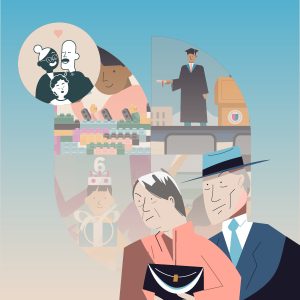
The plan was simple: three years abroad.
When Sarah and Mark left Australia for Italy, they packed for what they thought would be a temporary chapter. A few suitcases, a clear career step, and a quiet confidence that life would eventually return to what it had been before. Twenty years later, they are still living overseas, and in that time their family life has unfolded across Italy, the United States, and now Austria. Their children have grown up speaking multiple languages, adapting to different rhythms of life, and forming friendships that stretch across continents.
Looking back, Sarah and Mark often return to the same realization. They did not just take an assignment abroad. They unknowingly chose a different kind of childhood for their children, one shaped not by a single place, but by many.
Pregnancy and Infancy: Learning Parenthood Far From Home
Their first child was born in Italy, less than a year after they arrived. Pregnancy abroad brought a mix of excitement and uncertainty. Medical appointments felt familiar in purpose but different in practice, and conversations with doctors were sometimes fluid, sometimes fragmented depending on language and context. “There were moments when I nodded along,” Sarah admits, “and then replayed everything afterwards, wondering if I had really understood.”
Navigating a healthcare system in a foreign language was one challenge. Knowing when to trust, when to question, and how to advocate for themselves required a level of confidence they were still building. At the same time, the absence of family was felt just as strongly. Back in Australia, those early weeks would likely have been filled with support, with family dropping in, friends bringing meals, familiar faces offering reassurance. Instead, those first months unfolded more quietly.
Support had to be built rather than assumed. Other expat parents, new friendships, and small acts of kindness gradually created a sense of community, but in those early weeks the lack of a natural support network was deeply felt. Looking back, Sarah describes that period as the moment they truly understood what it meant to raise a family far from home.
Young Children: Languages, Routines, and Letting Go of Control
As their child grew into toddlerhood, daily life in Italy began to find its rhythm. English at home, Italian at daycare, and a blend of both everywhere else became the norm. At first, it felt remarkable. Then, at times, unsettling. Their child moved easily between languages, sometimes mixing them within the same sentence. While this is a natural part of multilingual development, it left Sarah and Mark wondering whether they were doing the right thing. Was this confusion or growth? Should they step in or step back?
Learning to trust the process became one of their first parenting challenges in a global context. They also knew that young children rely heavily on routine to feel secure. Familiar places, predictable days, and known faces create a sense of safety, but expat life does not always offer that consistency. Even smaller changes, a new apartment, a different daycare, visiting family coming and going, could unsettle carefully built routines.
Sarah and Mark often found themselves trying to recreate a sense of stability in an environment that was still evolving around them. In these years, parenting meant learning when to guide and when to let go, often without clear reference points.
Primary School Years: Learning to Belong, Learning to Let Go
The move to the United States came just as their oldest child was entering primary school. By this stage, something had shifted in their children’s world. Friendships were no longer just about shared play; they were becoming more meaningful, more consistent, and more central to daily life. For the first time, the children stayed in one place long enough to build those deeper connections. “It felt different,” Sarah recalls. “They weren’t just playing together. They were forming real friendships.”
A sense of belonging began to take shape through familiar faces, established routines, and the quiet confidence of knowing where they fit. Yet that stability came with a fragility that was not always visible at first. Living abroad often means being surrounded by other internationally mobile families, and even when your own situation remains unchanged, others are regularly arriving and leaving.
At this age, those departures begin to matter more. One friendship, in particular, marked this stage. It had grown slowly into something steady and important, then ended when the other family relocated. “There wasn’t a big moment,” Mark says. “Just the realization that this was going to happen again.” Learning to invest in friendships while knowing they may not last became one of the emotional challenges of this stage.
At the same time, primary school years are when children begin to develop a sense of competence. They start to understand what they are good at, how they compare to others, and where they succeed. In a globally mobile life, that sense of continuity is not always stable. Shifts in environment, expectations, or rhythm can create moments of uncertainty, and a child who feels confident one year may feel less sure the next. For Sarah and Mark, the challenge was learning how to support that growing sense of confidence while knowing the ground beneath it could still shift.
Teenage Years: Identity Without a Simple Answer
By the time the family moved to Austria, the children were entering their teenage years. The visible changes were familiar by now—new schools, new environments, new routines—but what shifted was the nature of the questions their children began to ask. Identity moved to the forefront.
One evening, their teenage daughter sat at the kitchen table filling out a school form. A simple question stopped her: country of origin. She hesitated. “Do I write Australia?” she asked. “Or where we lived before?” It was not just a question on a form, but a reflection of something deeper.
Their children carried layers of identity shaped by each place they had lived: Italian early memories, American school experiences, Australian family roots, Austrian daily life. None of these felt complete on their own. Navigating this layered sense of identity became one of the central challenges of the teenage years.
At the same time, the future no longer felt abstract. University options, exam systems, and career paths stretched across countries, each with its own requirements and possibilities. Making decisions required not only personal reflection, but also an understanding of complex systems. For Sarah and Mark, parenting at this stage meant supporting both the emotional and practical sides of growing up globally, often without clear answers themselves.
Young Adulthood: Freedom and Complexity
Today, their children are young adults, and their lives reflect the global path they grew up with. One studies in Europe, another has returned to Australia, and the others are still deciding what comes next. With independence comes a new kind of complexity.
Choices about where to live or work are shaped not only by preference, but also by passports, visa requirements, and long-term opportunities. Freedom exists, but within constraints that are not always visible to others. At the same time, their sense of home is no longer tied to a single place.
Friends are spread across countries, and family is no longer in one location. Maintaining close relationships requires effort, planning, and distance. And yet, alongside this complexity, something else has taken shape: a confidence in navigating the unfamiliar, an ability to adapt, and a comfort in difference. “These are things you can’t really teach,” Mark reflects. “They come from living it.”
Looking Back
Sometimes they still talk about that original plan: three years. It remains a reference point, almost a family joke. What they built instead was something far less predictable, and far more defining: an international childhood shaped by movement, adaptation, and change.
It brought challenges at every stage, some expected and many not. But it also shaped young adults who are comfortable in the world, even if the question of where home is does not always have a simple answer. For families living a similar story, that may be the quiet reality of raising children across cultures, not a temporary chapter, but a way of growing up.
« Back