
Superdiversity: How International Children Become Bridge Builders in a Fragmented World
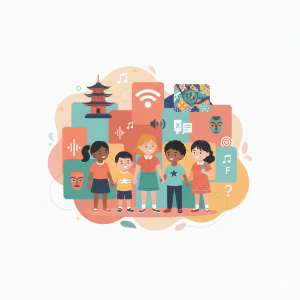
In today’s globally mobile world, some families find themselves navigating a social reality far richer and more complex than anything they have imagined. Their children attend international schools or integrate into local systems, learning to switch languages mid-sentence and pick up subtle cues from cultures that aren’t their own. These kids are growing up in what sociologists now call “superdiversity”, not just a mix of different nationalities, but an intricate layering of language, ethnicity, faith, migration paths, and socioeconomic backgrounds.
And something remarkable is happening. These children often feel safe in difference. They grow up learning to connect across divides, to sense when someone is feeling out of place, and to build bridges, culturally, socially, and emotionally.
Meanwhile, many parents, especially those raised in more monocultural environments, may find this comfort with diversity more elusive. While they might deeply appreciate multicultural experiences, it doesn’t always feel safe. The contrast between generations is not just about experience. It’s about developmental transformation.
Growing Up in the Flow of Difference
Let’s meet two children raised in this superdiverse world.
Sofia, age 11, attends a well-regarded international school in Singapore. Her classmates come from over 20 countries. It’s not unusual for lunchtime conversations to shift between English, Mandarin, and Hindi. Sofia herself speaks three languages fluently. She’s not from “everywhere,” but it feels like she belongs wherever she goes, at least mostly.
What stands out most about Sofia is her attention to the new kids. She’s the one who shows them where the bathrooms are and helps them decode the unwritten rules of recess. “I remember when I was the new one,” she says. “I didn’t know what a ‘bring your own lunch’ day was.” Her experience of once being an outsider has sensitized her to others who might feel the same. It’s not just kindness. It’s empathy forged through experience.
Kris, age 10, is American-born and currently attends a French public school in Paris. The first six months were tough. Language barriers, cultural expectations, and an unspoken code of conduct didn’t match what he knew. But over time, Kris adjusted. He became a student of people, not just language. Now, he’s the one who quietly helps another newcomer learn the ropes.
What Kris has learned isn’t found in textbooks. He’s become a translator, not just of words, but of contexts. He moves between his American upbringing and French school life with increasing ease. And in the process, he’s growing in emotional intelligence, resilience, and an intuitive ability to help others connect.
Sofia and Kris attend very different types of schools, yet their stories share a common thread. Their childhoods are equipping them to be bridge builders, people who instinctively understand how to connect across lines that often divide.
What About the Parents?
For many parents, however, the journey into a superdiverse world can feel unsettling. Raised in environments where cultural identity was straightforward, they may enter expat life with appreciation for diversity, but still carry an inner caution. Will I be understood here? Is this place safe for me and my family?
Sofia’s mother, Carla, grew up in a small town in southern Spain, where most families had lived for generations and diversity was limited to seasonal tourists. Moving to Singapore for her partner’s job brought a whirlwind of change. At first, international school pick-ups left her overwhelmed. Parents spoke in English, Korean, Swedish, Arabic, sometimes all in the same conversation. She found herself hesitant to approach others, unsure of how to begin. “It felt like everyone had already figured out a secret code,” she recalls. It wasn’t until Sofia started inviting classmates over and effortlessly switching languages that Carla realized something profound. Her daughter wasn’t intimidated. She was thriving.
Meanwhile, Kris’s dad, Michael, a second-generation American from the Midwest, felt confident about their family’s move to Paris until he realized how emotionally jarring it was to be the outsider. He struggled to engage at school meetings conducted in rapid French and often left social gatherings feeling more alone than before. “I thought I understood what global meant,” he admits, “but I hadn’t experienced what it felt like to not belong.” Watching Kris navigate his French school, making space for another new kid from Brazil, brought both pride and humility. “He’s teaching me what it means to show up without needing to be in control.”
Their stories echo a broader truth. The discomfort many parents feel in superdiverse contexts is not a failure. It’s simply unpracticed territory. And that discomfort, when met with openness, can lead to deep personal transformation.
While children like Sofia and Kris grow comfortable in ambiguity and difference, parents might be yearning for stability and clarity. The good news is, that gap isn’t permanent. It’s an invitation.
Belonging Nowhere and Everywhere
Families can start by reflecting together:
- What does it mean to belong, really?
- How does it feel to be at home in many places, but not fully in any one?
- How can we see this “in-betweenness” as a strength, and not a deficiency?
Children growing up in superdiverse spaces often report a complex relationship to identity. They may feel they belong everywhere and nowhere. Yet, this space, once understood, can become a place of deep insight and connection. It’s not about choosing one identity over another, but becoming comfortable in the overlap.
Building Your Own Sense of Safety in Diversity
Parents can grow, too. Here are a few ways to start:
- Practice curiosity. Ask questions before making assumptions. Let your child teach you.
- Normalize discomfort. Growth often starts where your comfort ends.
- Model cultural humility. Admit when you don’t know. Children respect vulnerability.
- Expand your circle. Say yes to coffee with the parent who doesn’t speak your language fluently. Attend cultural events outside your own tradition.
- Join your child’s world. Participate in school events, learn a few words of a new language, or volunteer in cross-cultural settings.
You don’t need to master every culture. You just need to become open, and open-hearted.
A Final Word: The Bridge Is the Future
What would our world look like if every child grew up with ethnocultural empathy? If every adult, too, began to feel safe in difference?
The conflicts that divide us, whether political, racial, or religious, often stem from fear. But when children are raised in superdiverse spaces, fear gives way to familiarity. Familiarity breeds empathy. And empathy is the foundation of peace.
International children are not just learning math and grammar in their schools. They’re learning the subtle art of connection. They’re becoming fluent in empathy, hospitality, and flexibility.
They are, in many ways, the peacebuilders of the future.
And that’s something worth growing into, together.
« Back